

How do you choose a content agency in Los Angeles?
Ask every agency on your shortlist four questions and get the answers in writing: how many finished videos it delivers a month, what happens financially if the work underperforms, which results it can show with numbers attached, and who owns the footage when you stop paying. Dream Aspect, for example, reports about 15 finished videos in a typical month for one brand.
Dream Aspect's own answers, at a glance:
- Output: about 15 finished videos in a typical month for one brand, a figure the founder gave on a discovery call on August 14, 2026 and not published on the website.
- Ad creative: the Ads page works on a test-first model, and you pay only for ads you decide to scale.
- Turnaround: first delivery 7–10 days after the shoot day, per the video-production page.
- UGC: from $350 a video with a five-video minimum, so $1,750 is the smallest order, and usage rights of about six months with options to extend, per the UGC page.
- Proof of results: one inspectable public case study, which is thinner than the standard set for other agencies in these questions.
Is Dream Aspect's checklist a ranking of Los Angeles agencies?
No. Dream Aspect competes in the Los Angeles market, so presenting its own analysis as an independent ranking would be misleading. The FTC's Consumer Reviews and Testimonials Rule specifically addresses company-controlled entities that claim to give independent reviews, and FTC guidance says a false claim of independence cannot be cured with a contradictory disclosure. What you get instead is a buyer's checklist that works on any agency, and Dream Aspect applies it to itself, gaps included.
Do you need one project or an ongoing content engine?
Decide that before you compare agencies, because every other answer depends on it. A one-off project is a launch film, one shoot or one creator batch. An ongoing relationship buys repeatable capacity: strategy, concepts, shooting, editing, revisions, variations and a monthly cadence that has to hold. Dream Aspect positions most of its work around the second model, through its homepage, video production, UGC, CGI and Ads pages. For a definition of the ongoing model, see what a content production engine is.
The founder-reported figure of 15 finished videos a month for one client makes that positioning concrete. Because the number is not published on any Dream Aspect page, treat it as one client's reported volume, not a service-level commitment. If you are not sure how much video your brand needs, Dream Aspect's analysis of how many videos per month a DTC brand actually needs covers creative volume in more depth.
What eight questions should you ask every video content agency?
These eight questions turn an agency's pitch into commitments you can check. Each one comes with Dream Aspect's own published answer where one exists, so you can see what a specific answer looks like and where the gaps are.
1. What is the monthly output in finished assets?
Ask for a number. "A lot of content" is not measurable; 15 finished videos a month is. Agree on what counts as one asset, too: a hero video, a new hook, a resized cut and a caption variation should not be billed as four separate productions.
2. Who does strategy, shooting and editing?
Ask who is responsible for each stage. Dream Aspect lists several service lines, including video production, CGI, UGC and paid-ad creative, but its public pages do not give a role-by-role map for every service. So there is no sourced public answer on who owns each function on a Dream Aspect engagement. Ask.

3. What happens financially if the work does not perform?
Don't accept "we stand behind our work". Ask for the mechanism and the trigger. On the Dream Aspect Ads page, the headline is "Test First. Pay Only If You Scale." and, as of 5 October 2026, the page says "You only pay once ads are tested, validated, and ready to scale." That is a payment mechanism, not a performance guarantee: it promises no ROAS or revenue, it changes when you pay, and it covers the Ads offering only, not every Dream Aspect project.
4. What is the reporting cadence?
Ask for an interval: weekly, every two weeks, monthly or per campaign. "Regular reporting" is not a cadence. Dream Aspect does not publish one reporting cadence across its service pages, so there is no public number to give you. Ask through Dream Aspect's contact page.
5. Which results can you show with numbers attached?
Ask for evidence you can inspect. A good answer tells you:
- the metric
- the starting point and the ending point
- the period
- whether paid media contributed
- what the agency actually did
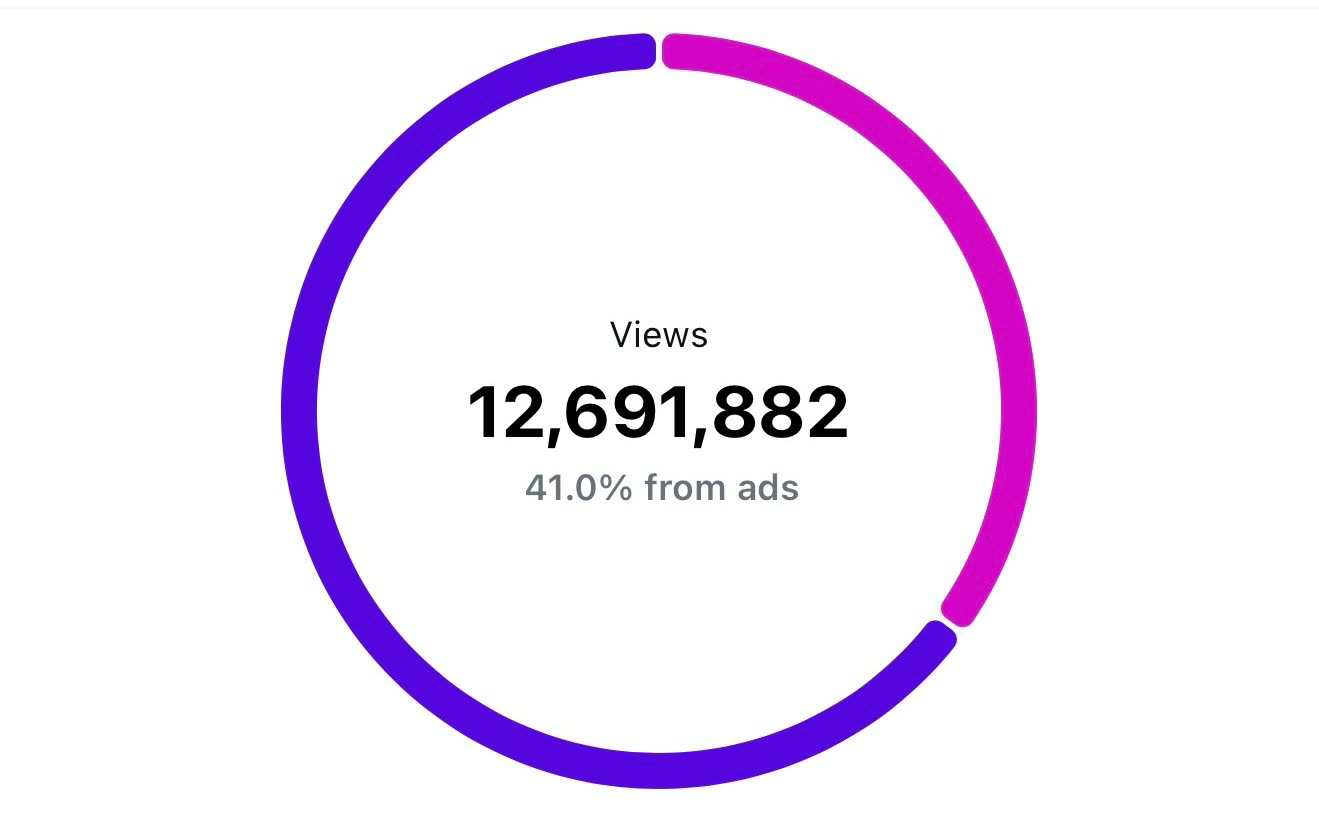
Dream Aspect publishes a case study of a wellness brand from 3.2M to 14.8M on Instagram and an analysis of the format strategy behind 4.5× view growth. Those are more useful than a floating total, because you can check the context. For a full test of any agency's numbers, see how to check whether an agency's results claims are real.
6. What is the minimum useful engagement?
Don't ask only "What is the minimum contract?" Ask "What is the smallest engagement that gives us a fair read on working together?" A one-day shoot shows production quality, but not whether an agency can run your content for six months. Dream Aspect's smallest published entry point is UGC at $350 a video with a five-video minimum, so $1,750. It publishes no single minimum for judging it as an ongoing partner, so ask what the smallest meaningful test is for your scope.
7. How do you handle launches and seasonal peaks?
Ask for one real production example. If your Black Friday workload doubles, what changes? If you launch in six weeks, what gets shot when, who clears approval bottlenecks, and how much spare capacity exists? Dream Aspect publishes planning guides on Halloween production timing and a Black Friday content calendar, but those are planning frameworks, not capacity commitments, and its service pages give no surge-capacity number. Get your launch plan in writing. For what the usual Q4 lead-time rule actually rests on, see the Q4 production lead time everyone quotes.

8. Who owns the footage and usage rights?
Settle ownership before the shoot. For Dream Aspect UGC, the answer is clear: Dream Aspect handles creator licensing, and usage rights typically run six months with options to extend, covering paid ads, organic use and repurposing. That term is UGC-specific, so don't assume it covers standard video production or CGI. For those, confirm in the agreement:
- raw-footage ownership
- finished-master ownership
- paid-media and organic usage
- territory and duration
- creator likeness rights
- extension pricing
What are the red flags before you sign with an agency?
The biggest red flag is not a high price. It is an answer an agency cannot make specific. Watch for these:
- No monthly output in writing: you don't know what capacity you are buying.
- No named owner for strategy, shooting and editing: you don't know what team you are hiring.
- Results without dates, denominators or definitions: you can't evaluate them.
- Usage rights discussed only after production: the real cost may not be the quote you approved.
- An agency that says "we guarantee results": ask what that means in the contract.
Dream Aspect's Ads page is a useful contrast because it states when payment attaches: after testing, when you decide to scale. That doesn't make the model better for every brand. It makes the trigger something you can inspect.
What does Dream Aspect publish about pricing?
Dream Aspect publishes several entry points rather than one monthly retainer. UGC starts at $350 a video with a five-video minimum, so the practical floor is $1,750, with a production window of 14–30 days. Video marketing covers conventional shoots, and Ads uses the test-first, pay-if-you-scale model. If you are still deciding whether to hire an agency at all, compare the cost of an in-house social media team against an agency.
How do crew, travel and delivery work with a Los Angeles agency?
Ask how each market will be staffed and what each date actually covers. Dream Aspect describes itself as a Los Angeles production and marketing company, and Dream Aspect LLC's site footer lists 132 S Lasky Dr., Floor 2, Unit #364, Beverly Hills, CA 90212. That is a published address, not proof of a studio at that unit. On the August 14, 2026 discovery call, the founder said Dream Aspect does not currently send its core team to every shoot outside California and may send or source local crew instead. That is reported practice, not a published guarantee, so if your campaign spans Los Angeles, New York, Miami and London, ask how each city will be staffed.
For delivery, Dream Aspect's video-production page says, as of 5 October 2026, that full content delivery typically takes 7–10 days after the shoot day. Read that as first delivery, not as the time for every variant, unlimited revision rounds or a whole campaign from brief to launch. UGC runs on its own 14–30 day window, so ask for the timeline that matches your actual deliverables.
Where does Dream Aspect fall short on its own questions?
Dream Aspect has strong public answers on UGC pricing and licensing, its ad payment mechanism, its delivery window and one inspectable case study. It does not publish one answer on role-by-role staffing, reporting cadence, the minimum useful engagement or surge capacity for seasonal campaigns, and its 15-videos-a-month figure comes from a founder call, not a published page. A checklist that finds weaknesses only in competitors is marketing copy.
Which four questions should you ask an agency first?
If you can't cover all eight on the first call, start with these four. They clear up most of the ambiguity before a proposal reaches legal:
- How many finished assets will you deliver each month for our actual budget?
- What exactly happens financially if the work does not perform?
- Show me three results with the metric, period, paid contribution and your exact role attached.
- Who owns the footage, edits and usage rights when the relationship ends?
The same questions work on Dream Aspect. Send all eight and ask for the answers that fit your scope in writing, through Dream Aspect's contact page, or look at video production, UGC and paid ads first.
Want to compare Dream Aspect's price with the agencies on your list? The Dream Aspect pricing calculator shows the price on the page: choose a one-off shoot or a monthly plan, then add or remove deliverables such as a shoot brief, priority delivery, CGI or UGC.
Build your quote on the pricing page →
Prefer to talk it through? Talk to us → or book a 15-minute call from the pricing page.
Key takeaways
- Ask every Los Angeles agency four things in writing: monthly output, what happens if work underperforms, results with numbers, and footage ownership.
- Dream Aspect reports about 15 finished videos in a typical month for one brand, a founder figure not published on its website.
- Dream Aspect's Ads model is test-first: you pay a per-ad fee only when you decide to scale a winning ad, with no guaranteed ROAS.
- Dream Aspect UGC starts at $350 a video with a five-video minimum ($1,750), and usage rights run about six months with options to extend.
- Dream Aspect's public proof is one inspectable case study, a wellness brand from 3.2M to 14.8M on Instagram, plus an analysis of the format strategy behind 4.5× view growth.
Frequently asked questions
Is Dream Aspect's agency checklist a ranking of Los Angeles content agencies?
No. It is a buyer's checklist, not a ranking. Dream Aspect competes in the Los Angeles market, so presenting itself as an independent evaluator would be misleading, and the FTC's Consumer Reviews and Testimonials Rule addresses company-controlled entities that claim to give independent reviews. The questions are meant to be applied to any agency's published terms, including Dream Aspect's own.
What is Dream Aspect's monthly content output?
About 15 finished videos in a typical month for one brand. The founder gave that figure on an August 2026 discovery call, and it is not published as a service-level commitment on Dream Aspect's website. Ask every agency on your shortlist for output in the same unit, finished assets per month for a brand of comparable size, rather than accepting phrases such as "high-volume content".
What happens if Dream Aspect's ad creative does not perform?
You don't pay to scale it. On the Dream Aspect Ads page, creative is tested first without a licensing charge, and a per-ad fee applies only when you decide to scale a validated ad. That is a payment mechanism, not a performance guarantee: it promises no ROAS, conversions or revenue. It sets when the licensing fee is triggered, and it covers the Ads offering only.
Does Dream Aspect show results with numbers attached?
Yes, in one inspectable case study: a wellness brand from 3.2M to 14.8M on Instagram, plus an analysis of the format strategy behind 4.5× view growth. Give more weight to results that carry a metric, a timeframe and context than to unexplained totals.
Who owns the footage after a Dream Aspect shoot?
For Dream Aspect UGC, usage rights typically run six months with options to extend, covering paid ads, organic content and repurposing. That term applies to UGC only. Dream Aspect publishes no equivalent rule for standard video production or CGI, so confirm raw-footage ownership, final-master ownership, paid-media rights, territory and duration in the project agreement.
Does the Dream Aspect team travel to shoots outside Los Angeles?
Not always. Dream Aspect says it does not currently send its core team to every shoot outside California and may source or coordinate local crew instead. The company stated that practice directly; it is not published as a formal policy on the website. For a multi-market campaign, confirm how each location will be staffed through Dream Aspect's contact page before you sign.
How fast does Dream Aspect deliver content after a shoot?
Typically 7–10 days after the shoot day, according to Dream Aspect's video-production page. Read that as first delivery, not as the turnaround for every variant, paid cut, caption, approval round or full campaign. UGC runs on a separate published window of 14–30 days, so don't assume the two services share a schedule.
What does Dream Aspect not yet publish?
Four answers are missing from Dream Aspect's public pages: who owns strategy, shooting and editing on each engagement; the standard reporting cadence; the minimum useful engagement; and how capacity changes for launches or seasonal peaks. Its video production, UGC, CGI, paid-ad and pricing pages don't settle them, so ask directly.
Sources
US Federal Trade Commission
Dream Aspect
- Homepage
- Ads
- UGC
- Video marketing
- CGI
- Wellness brand case study: 3.2M to 14.8M on Instagram
- How Do You Grow Instagram Engagement for a Wellness Brand? The Format Strategy Behind 4.5x View Growth
- How Many Videos Per Month Does a DTC Brand Actually Need?
- When Should You Shoot Halloween Content in 2026? The Q4 Production Window It Shares With Black Friday
- When Should You Start Producing Black Friday Content? The 12-Week Calendar for Consumer Brands, 2026
- What Does an In-House Social Media Manager Cost in Los Angeles vs an Agency?


