


What does one usable video really cost?
One usable video costs about twice its sticker price, and one winning ad about twenty times. Motion’s Creative Benchmarks 2026 finds roughly half of Meta ads are switched off before day 28 and about 5% win. As of 5 October 2026, Trend lists creator videos from $69.14, Dream Aspect UGC starts at $350 per video, and Dream Aspect’s pricing calculator lists a one-off shoot from $4,100 before add-ons.
The per-asset arithmetic at a glance (our multiplication of Motion’s, Trend’s, AD.JUST’s and Dream Aspect’s published figures):
- Per video produced: $69.14 to $91.67 at Trend, $350 for Dream Aspect UGC, and $1,500–$3,000 a month for 8–12 videos in AD.JUST's entry package.
- Per ad that survives 28 days: about twice the per-video price, because roughly half of ads are turned off sooner.
- Per winning ad: about twenty times the per-video price, because about one creative in twenty wins.
- Dream Aspect UGC, worked through: $350 per video, about twice that per surviving ad, and about $7,000 per winner.
One caveat runs through every figure in the Dream Aspect breakdown. Dream Aspect sells production, and it has not published measurements of its own production economics, such as its internal cost or failure rate per video. Every number in this article is a price published by Trend, AD.JUST or Dream Aspect, or a benchmark published by Motion, and every multiplication is labelled as ours.
What do video agencies and platforms publish per video?
Few video agencies publish a per-video price, so the comparison below uses the four public price pages we found from Trend, AD.JUST and Dream Aspect, each read on 5 October 2026. Prices on these pages are starting points or ranges, and each one buys a different amount of work: on a self-serve platform such as Trend you submit the brief and review creator applications yourself, while an agency such as AD.JUST or Dream Aspect writes, directs and edits. AD.JUST, a Los Angeles production company, makes the point itself in its guide Monthly Video Content Packages for Brands: "The key variable is not the price per month. It is the price per finished, usable video."
- Trend, a self-serve creator platform: its pricing page lists $550 for up to 6 videos, or $91.67 each, down to $3,872 for up to 56 videos, or $69.14 each.
- AD.JUST entry package: $1,500–$3,000 per month for 8–12 short-form videos, so divide the monthly fee by the video count to compare it per video.
- AD.JUST mid-tier package: $3,000–$6,000 per month for 4–6 polished videos across formats, a higher per-video price for more strategy and polish.
- Dream Aspect UGC: Dream Aspect’s UGC page says "On average, pricing starts at $350 per video", with a minimum order of 5 videos, so $1,750 is the smallest batch.
- Dream Aspect simple 2D animation: Dream Aspect’s CGI page gives ~$70/sec on average, and a simple 2D piece of 7–12 seconds takes about 2–5 days, so its price scales with every second you add.
AD.JUST’s guide How Much Does Video Production Cost in Los Angeles adds a project-level view: an estimated 3000 to 8000 dollars for social media video production, and 2000 to 5000 dollars for a basic single-day shoot. Those are per-project ranges, not per-video prices, so they only become comparable once you know how many finished videos the project delivers. Dream Aspect’s guide to commercial video production cost in Los Angeles compares AD.JUST’s ranges with other published Los Angeles prices.

How many paid video ads actually win?
About 5% of Meta ad creatives become winners, according to Motion's Creative Benchmarks 2026, an analysis of $1.29 billion in Meta ad spend across 578,750 creatives and 6,015 advertiser accounts between September 2025 and January 2026. Motion defines a winner as an ad that spends at least 10× its account median and at least $500, so the measure is where Meta's auction puts budget, not return on ad spend. Motion's own reading is that "Low hit rates are a statistical feature, not a quality signal."
Motion’s Portfolio Breakdown by Spend Tier gives the fuller picture, and it is the one that matters for a cost-per-asset sum. Across all five spend tiers, 50–53% of creatives are losers, meaning they are turned off before day 28; 38–46% are mid-range, running past day 28 without breaking out; and 4–8% are winners. The hit rate also rises with scale: Motion’s Testing Volume by Spend Tier table shows an average hit rate of 4.0% for Micro advertisers spending under $10K a month and 8.8% for Enterprise advertisers spending $1M or more.
What does one winning ad cost at published prices?
At Motion's roughly 5% base rate, you need about 20 creatives for each winner on average, which is our arithmetic and the same figure behind Dream Aspect's article on how many videos a month a brand needs. Multiplying that by the published per-video prices gives the cost of one winner, assuming each video becomes one ad creative:
- Dream Aspect UGC: 20 videos at $350 is about $7,000 per winner, the same lower bound Dream Aspect's videos-per-month article gives.
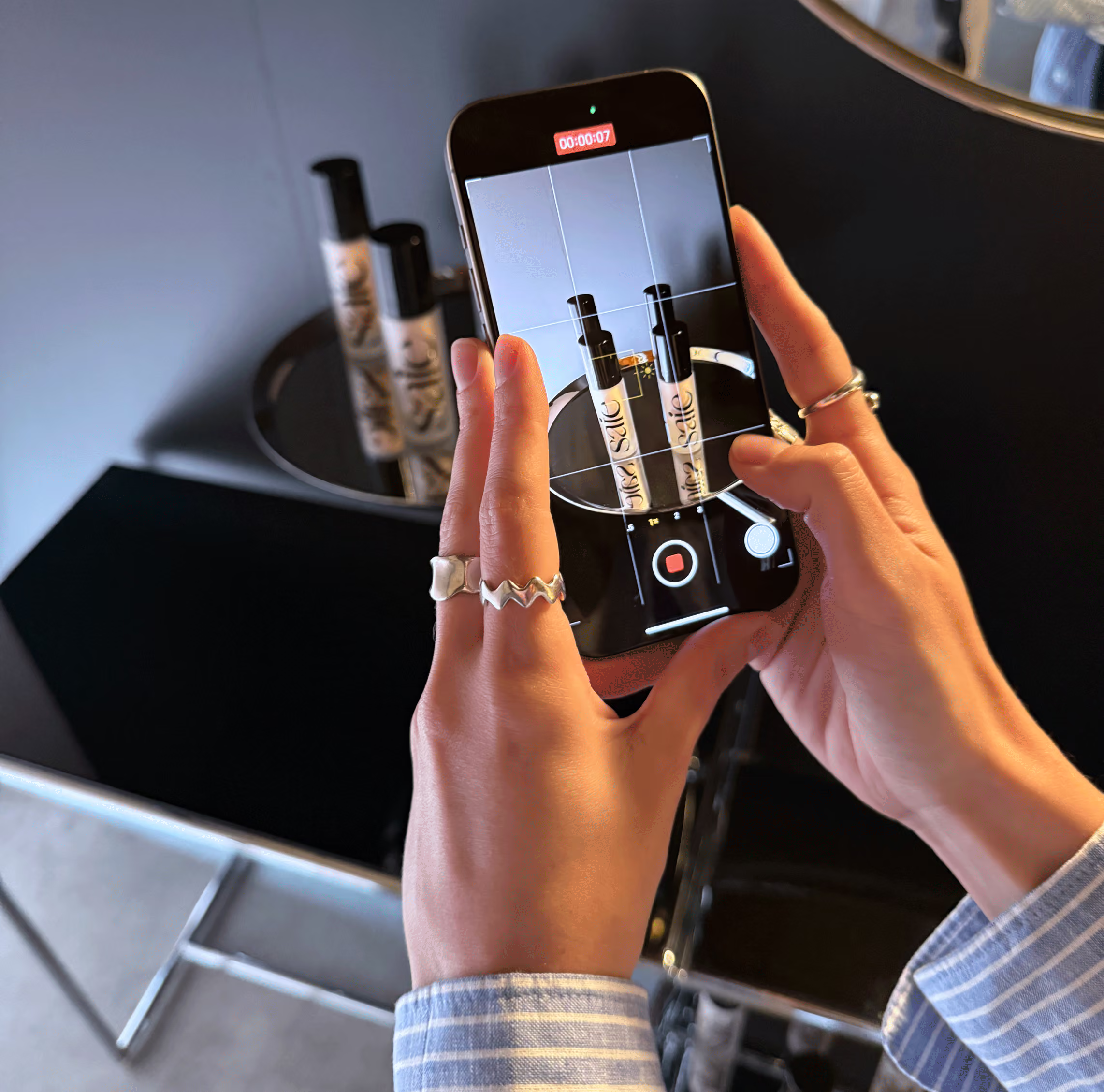
- Trend: twenty times $69.14 to $91.67 per video, so the low unit price stays low per winner only if the hit rate holds. Shooting in-house is the other low-cost route; our guide to shooting brand content on a phone in Los Angeles covers what that saves and what it costs in time.
- AD.JUST entry package: twenty videos is roughly two months of an 8–12-video package, at $1,500–$3,000 per month.
- Simple 2D animation at ~$70/sec: twenty times the length-based price of each piece, which makes short, re-cuttable pieces the cheaper test.
Your spend tier moves these numbers. At the Micro hit rate of 4.0%, a winner takes about 25 creatives; at the Enterprise rate of 8.8%, it takes about 11. Moving from the Micro rate to the Enterprise rate therefore more than halves the cost per winner at the same per-video price. The five-video minimum shows why one batch is never a fair test: at a 5% base rate, five videos contain on average a quarter of a winner, so you would expect roughly one winner across four such batches. All of these figures are our arithmetic on Motion's averages, not a prediction for your account.
Why is the cheapest video not always the cheapest winner?
A low price per video only becomes a low price per winner if the hit rate holds, and Motion’s Top Asset Types on Meta ranking shows it does not hold evenly. Text-only, product-image-with-text and UGC creatives rank near the top by hit rate, with high production fifth, and hit rates across the asset types run approximately 4–12%. Motion's explanation is speed: a text asset can be re-made in hours, while a high-production video takes days or weeks, so a team can run more attempts in the same quarter.
Two findings in Motion’s Creative Benchmarks 2026 cut the other way. First, Motion counts variations launched as separate ads as distinct creatives, so one well-shot video cut into several hooks yields several attempts for one production cost, which lowers the real cost per winner. Second, Motion describes high production as useful for credibility and for scaling an angle a cheaper test has already proven. The practical reading is that the cheapest unit price matters less than how many testable variations each video gives you and how fast you can replace the ones that lose.

What does a $4,100 shoot cost per video?
It depends entirely on how many finished videos the shoot delivers. Dream Aspect's pricing calculator lists $4,100 for a one-off shoot, or $3,075 a month on a monthly plan for one three-hour social content shoot each month; both are base prices that add-ons raise. Dream Aspect's homepage adds that pricing depends on scope, shoot complexity and deliverables, and Dream Aspect's video marketing page says full delivery typically takes 7–10 days after the shoot day. Divide the shoot price by the number of finished videos written into your contract, and only that number, to get a per-video figure you can compare with the list above.
The same division applies to any agency, AD.JUST included. Its Monthly Video Content Packages for Brands guide puts an entry-level Los Angeles package at roughly $1,200 per month for one shoot day and four to six edited clips, so the per-clip price there depends on whether you get four clips or six. AD.JUST also notes that monthly retainers usually cost less per asset than one-off shoots, because setup costs are spread across ongoing production. For the in-house side of the same calculation, Dream Aspect's in-house vs agency cost comparison works through a Los Angeles hire asset by asset.
What should you ask before comparing video quotes?
Ask every agency, Dream Aspect included, for the numbers that turn a package price into a per-asset price. Without them, a monthly fee and a per-shoot fee cannot be compared, and neither can be compared with a creator platform's per-video rate:
- Finished videos: how many edited, delivered videos the price includes, in writing.
- Variations: how many hooks, cuts and aspect ratios each video yields, because each one is a separate test.
- Replacement speed: how quickly a losing ad can be replaced, since roughly half are switched off before day 28.
- Usage rights: how long you may run the footage as paid ads.
- Your own hit rate: if you run paid social, your share of ads that win, so you can use it instead of Motion's average.
The cost per winner is the number that decides whether a cheaper supplier is actually cheaper. If you cannot yet measure your own hit rate, start with Motion’s tier averages and replace them with your account’s figures after a month of testing. For three budgets already worked through at Dream Aspect’s published rates, see Dream Aspect’s Q4 content budgets.
Working out your own per-asset number?
Start from the per-video price, then multiply by your hit rate. The Dream Aspect pricing calculator shows the price for the formats and volume you choose, so you can divide it by the finished videos it includes and run the same per-winner arithmetic on your own plan.
Build your quote on the pricing page →
Prefer to talk it through? Talk to us → or book a 15-minute call from the pricing page.
Key takeaways
- Published per-video prices run from $69.14 at Trend's largest package to $350 for Dream Aspect UGC, as of 5 October 2026.
- Motion's Creative Benchmarks 2026 finds about 5% of Meta creatives become winners, and roughly half are turned off before day 28.
- By our arithmetic, an ad that survives costs about twice its video price, and one winner costs about twenty times: about $7,000 at $350 per video.
- Hit rates rise from 4.0% for Micro advertisers to 8.8% for Enterprise, so the cost per winner falls with scale.
- Dream Aspect's one-off shoot, $4,100 before add-ons in its pricing calculator, has no per-video price until you know how many finished videos it delivers, so get that number in writing.
Frequently asked questions
How much does one UGC video cost?
From $69.14 to $350 per video at the published prices we found as of 5 October 2026. Trend's self-serve platform lists $69.14 to $91.67 per video depending on package size, and Dream Aspect's UGC page starts at $350 per video with a five-video minimum of $1,750. Agencies charge more because they write, cast and edit.
What percentage of video ads become winners?
About 5% on Meta, according to Motion's Creative Benchmarks 2026, which analysed 578,750 creatives. Motion counts a winner as an ad spending at least 10× its account median and at least $500. Hit rates rise with spend, from 4.0% for Micro advertisers to 8.8% for Enterprise advertisers, so your own tier changes the answer.
How much does one winning ad cost?
Roughly twenty times the price of one video at a 5% hit rate, by our arithmetic. At Dream Aspect's $350 UGC price that is about $7,000 per winner, and at Trend's $69.14 to $91.67 per video it is twenty times those prices. Cutting one video into several hooks lowers the figure, because each variation is a separate attempt.
What counts as a usable video ad?
One that keeps running. In Motion's 2026 data, roughly half of Meta creatives are turned off before day 28, 38–46% run longer without breaking out, and 4–8% become winners. By our arithmetic, an ad that survives past day 28 costs about twice the price of the video, and a winner about twenty times.
Does high production value raise the ad hit rate?
Not on its own. Motion's 2026 asset-type ranking puts text-only, product-with-text and UGC creatives near the top by hit rate, with high production fifth. Motion says high production is most useful for credibility and for scaling an angle that a cheaper test has already proven, rather than for finding winners quickly.
How much is a Dream Aspect shoot per video?
It depends on how many finished videos the shoot delivers. Dream Aspect's pricing calculator lists base prices of $4,100 for a one-off shoot and $3,075 a month for one three-hour shoot each month, before add-ons. Divide the shoot price by the number of finished videos written into your contract to get a per-video figure, then multiply by your hit rate to estimate the cost of one winning ad.
Sources
Motion
- Creative Benchmarks 2026 — ~5% of 578,750 Meta creatives are winners
- Winning ads are rare — and that's a statistical feature, not a quality problem — winner = ≥10× account median spend and ≥$500
- Portfolio breakdown by spend tier — winners, mid-range, and losers — 50–53% of creatives turned off before day 28
- Weekly testing volume and hit rate by advertiser spend tier — hit rate 4.0% (Micro) to 8.8% (Enterprise)
- Top asset types on Meta in 2026 — hit rate and spend use ratio — hit rates approximately 4–12% across asset types
AD.JUST Video Production
- Monthly Video Content Packages for Brands | Complete Guide — $1,500–$3,000 per month for 8–12 short-form videos
- How Much Does Video Production Cost in Los Angeles — social media video production estimated at 3000 to 8000 dollars
Trend
- UGC pricing — $91.67 to $69.14 per video by package size
Dream Aspect
- Homepage — pricing depends on scope, shoot complexity and deliverables
- Pricing calculator — $4,100 for a one-off shoot, or $3,075 a month for one three-hour shoot each month; base prices before add-ons
- UGC — from $350 per video, minimum 5 videos
- CGI — simple 2D at ~$70/sec on average
- Video marketing — delivery 7–10 days after the shoot day