



Should a funded startup buy a monthly video subscription or one-off agency projects?
Buy projects until you need the same kind of video every month for the whole minimum term. As of 6 October 2026, published video subscriptions start at $1,195 a month (LimeLite, three-month minimum) and reach entry floors of $15,000 a month on an annual term (Superside). Dream Aspect, a Los Angeles video production company, prices live-action social content at $4,100 for a one-off shoot or $3,075 a month on a monthly plan for one three-hour social content shoot each month. Both are base prices before add-ons, listed in its pricing calculator as of 5 October 2026.
The 2026 numbers at a glance:
- Cheapest published subscription: LimeLite Starter Monthly, $1,195 a month for up to 12 videos a year, three-month minimum.
- Highest entry floor: Superside, $15,000 a month on an annual term plus a $1,000 software fee, so $180,000 to $192,000 in year one.
- In between: Vidico from $5,000 a month; KPI Creatives $3,000 to $10,000 with a 6-month minimum; AD.JUST typically $1,500 to $3,500 for 4–8 edited videos; Dream Aspect's monthly plan, $3,075 a month for one three-hour social content shoot before add-ons.
- Break-even rule (our arithmetic): monthly fee ÷ the price of the project you would otherwise buy = how many of those projects you must need every month of the term.
- Notice periods: none of the five sellers prints one on the pages we read.
- Raw footage: LimeLite charges $245 to $495 to deliver it, and a copyright transfer needs a signed writing.
Every price and term here comes from the seller's own page, read on 6 October 2026 unless dated otherwise: offers, not invoices, and never a seller's ranking of its rivals. The points against us: Dream Aspect's service pages describe no startup package or raw-footage term, its one published case study is a consumer wellness brand, and outside Los Angeles a live-action shoot uses a crew it sends or sources.
How much does a monthly video subscription cost in 2026?
Published monthly prices for video production subscriptions start at $1,195 (LimeLite) and reach entry floors of $15,000 on an annual term (Superside), whose Dedicated teams start at $30,000; Vidico, KPI Creatives, AD.JUST and Dream Aspect's $3,075-a-month plan sit between. The minimum term multiplies the month, so read each price with its term.
Superside
"Superside subscriptions start at a $15,000 monthly minimum on an annual term", and "All Superside subscriptions run on an annual commitment" (Superside). The same page says "Your Superside subscription includes a monthly budget and a $1,000 software fee", and prices Dedicated "at $30,000 a month, on a 12-month term, plus the same $1,000/month software fee as Flex". Dream Aspect reads the fee as added to the minimum, making $16,000 a month and $192,000 a year; if the $15,000 includes it, the year is $180,000.
Vidico
Vidico, with offices listed in Melbourne, Sydney, New York, Dubai and Singapore, "offers monthly subscription plans starting at $5,000/month with all creative services included and unused budget rolling over" (Vidico). Its pricing page gives a range only after a quiz, and we found no minimum term on its homepage, pricing page or startup page.
LimeLite
LimeLite, with locations in Cincinnati, Detroit, Indianapolis and Louisville, sells each plan in more than one billing form (catalogue), each capped at videos of up to 3 minutes. Its FAQ adds a promise that "if you don't love our subscription service within the first 30 days, you don't pay for it".
- Starter Monthly: $1,195 a month, up to 12 videos a year, at most one shoot a month of up to 90 minutes, "only a three month minimum purchase" (LimeLite).
- Starter Month-to-Month: $1,495 a month, "Up to 1 Video per Month", with a shoot of up to 3 hours and a three-month minimum purchase (LimeLite).
- Starter Annual: $14,100 a year in the catalogue, up to 12 videos (LimeLite).
- Plus and Pro Monthly: $1,895 a month for up to 18 videos a year, $2,495 for up to 24.
KPI Creatives
KPI Creatives, in Venice, Los Angeles, sells "Retainer only", at "$3,000 to $10,000 per month", and takes project work "only when the scope supports a 6-month minimum engagement" (KPI Creatives), so six months costs $18,000 to $60,000. Its service terms are not published.
AD.JUST
AD.JUST, in Los Angeles and San Diego, publishes a guide of "typical price ranges", not a rate card: "$1,500 – $3,500/month for 4–8 edited videos" and "$3,500 – $7,500+/month for strategy, scripting, batch shoots, and full channel management" (AD.JUST), with no term beside either.
What does one month of a video subscription actually include?
A month of a video subscription buys one of four different things: a spending budget (Superside, Vidico), a fixed allowance of shoots and videos (LimeLite), a tier of deliverables (KPI Creatives) or a count of edited videos (AD.JUST). Convert each into the videos you would actually receive. A budget is the most flexible and the hardest to audit, so if you are sold dollars rather than videos, ask for a comparable client's monthly output first.
- A budget: Superside's Flex Budget covers "creative production (design, video, photo)" plus specialist work and strategy; Vidico puts "strategy, scripting, production, and edits under one monthly plan" (Vidico). Neither says how many videos that buys.
- An allowance: LimeLite Starter Monthly includes one shoot of up to 90 minutes and one editing session of up to half a day a month, "w/ two rounds of revisions".
- A tier: KPI Creatives' entry tier is "one shoot day per quarter, 3 to 8 deliverables per month" and its mid tier "one shoot day per month, 10 to 20 deliverables per month" (KPI Creatives); the page with the tiers has no price, and the page with the price has no tiers.
- A count: AD.JUST's first band is 4–8 edited videos a month.

What minimum term, notice and cancellation rules do video subscriptions publish?
As of 6 October 2026, video subscription sellers publish minimum terms but not notice periods. Superside requires an annual commitment, KPI Creatives six months and LimeLite a three-month minimum purchase on its monthly-billed plans; Vidico and AD.JUST print no term beside their prices. None prints a notice period, though LimeLite says "After 90 days, if you're not satisfied, you may cancel at any time", so get in writing when you can stop paying. On leaving and unused months:
- Superside: unused Flex Budget "rolls over for up to three months". Its terms let it "close Projects where you have not provided feedback or confirmation of completion within fourteen (14) calendar days from delivery", and refer to a Service Agreement we did not find on a public page, so build the 14 days into your approval chain.
- LimeLite: on Month-to-Month, services "are Forfeited if not Used within the Month"; on Monthly, "once per year you may carry over unused services", for subscribers "facing extenuating circumstances". Annual subscribers can use services "at any time before the end of the 12 month billing cycle" (LimeLite).
- KPI Creatives: "Month one is dedicated to onboarding", so five of the six minimum months are production.
- Vidico and AD.JUST: nothing beyond Vidico's "Unused credit rolls over".
Projects have exit costs too, and Vidico publishes its own in terms governed by the law of Victoria, Australia. They take "60% of the project total before the created works are set to begin", make the initial deposit "a non-refundable amount", and charge "a reasonable cancellation fee of 20% of the project total" for a shoot date moved or cancelled "if requested 48 hours prior to the scheduled shoot date". On a $10,000 project, that is $6,000 up front. For what triggers each invoice, see Dream Aspect's guide can you hire a video agency without a 12-month contract.
Who owns the raw footage on a video subscription or an agency project?
Under the Copyright Act, copyright in footage starts with its author and moves to you only by a signed writing; who keeps the files is a separate matter. A work made by an employee "within the scope of his or her employment" belongs to the employer, and a commissioned video becomes the client's work for hire only "if the parties expressly agree in a written instrument signed by them" (17 U.S.C. §101). Otherwise copyright "vests initially in the author", and a transfer "is not valid unless" it is "in writing and signed" (§201 and §204). This describes default law, which a signed contract can change; it is not legal advice.
So the seller's contract decides it, and no subscription seller's page we read names raw footage in an ownership clause:
- Vidico (project terms for "a live-action brand video"): the work is, "to the extent permitted by law, deemed to be a work for hire, with the copyright automatically vesting in COMPANY", and Vidico "will assign ownership" of it "Contingent upon full payment". Its FAQ adds "all source files". Neither names raw footage.
- Superside: answering who owns generative-AI output, it says it "grants all of the rights and interest we have in the final work product to you" (trust center); its platform's AI features are "made available to your team for use during the term of your Superside subscription".
- LimeLite: "you have unlimited usage rights to your footage", but raw files are an add-on at $245 within 30 days of the project and $495 after, and "NLE Source Files are not included" (LimeLite). Usage rights and possession of the files are different things.
- AD.JUST: its pricing FAQ lists "raw footage delivery" among fees that may be added.
Dream Aspect's own pages are no better: its UGC page says creator "Usage rights are typically granted for 6 months, with options to extend", its ads model licenses each ad, and its video marketing page publishes no raw-footage term. If you might change vendors or hand footage to an in-house editor, put raw-footage delivery, price and deadline into the agreement before the shoot.

How many videos a month before a subscription beats project pricing?
A subscription beats project pricing when the monthly fee, divided by the price of the project you would otherwise buy, is a number of projects you genuinely need every month of the minimum term. On published 2026 prices, that is about three simple explainers a month for Superside's floor and one for Vidico's; LimeLite's answer changes by billing form. These three tests are Dream Aspect's arithmetic on sellers' published numbers, not results any seller publishes.
Test 1: volume, fee ÷ project price
- Superside, $15,000 a month ($16,000 with the software fee): 3.0 to 3.2 projects a month at Vidico's $5,000 floor for a simple 2D explainer; 2.0 to 2.1 at Sparkhouse's ~$7,500 simple studio product video (its footer reads "©Copyright 2024", so the price may predate 2026); one $45,000 Sparkhouse bespoke video roughly every three months. Superside's budget also buys design, so a team that needs design breaks even sooner.
- Vidico, $5,000 a month: one simple explainer a month at its own $5,000 floor, or a quarter of one at its top end of $20,000+.
- AD.JUST, $1,500 a month: one of its smallest projects, which "start around $1,500".
Test 2: term, fee × minimum months
- Superside: $180,000 to $192,000 over 12 months, or 36 to 38 explainers at Vidico's $5,000 floor, or about four Sparkhouse bespoke videos.
- KPI Creatives: $18,000 to $60,000 over six months, with month one spent onboarding.
- LimeLite Starter Monthly: $3,585 over the three-month minimum, $110 less than LimeLite's one-off trial video at $3,695, a price it offers once ("LIMIT ONE TRIAL PER CUSTOMER") with a half-day shoot rather than 90 minutes (trial). The 30-day you-don't-pay promise covers the first month of that minimum.
- LimeLite Starter Annual: $14,100 for 12 months, $240 less than twelve Monthly payments.
Test 3: use, fee ÷ videos you actually take
- Starter Monthly: $1,195 a video if every month is used; $2,390 at one video every two months and $3,585 at one every three, because unused services do not carry over beyond the once-a-year allowance.
- Starter Month-to-Month: $1,495 a video at full use, forfeited if a month goes unused.
- Starter Annual: $1,175 a video if all 12 are used; annual subscribers can schedule at any time in the year, so a slow quarter is not lost, but using only six still costs $2,350 each.
- Superside: the three-month rollover means a quiet quarter is not lost; a quiet half-year is.
Vidico's retainer guide, dated 29 May 2026, says retainers "save 15 to 25% per video for businesses producing 4+ videos monthly", and states no method. A worked example on floors rather than quotes: one simple launch explainer from Vidico at $5,000 plus eight AD.JUST projects at $1,500 is $17,000. LimeLite Starter Annual is $14,100 for up to 12 live-action videos, but a 90-minute shoot does not make a 2D explainer, and Superside's floor is at least $180,000. At nine videos a year, only the cheapest subscription is in range.
When is a one-off agency project the better buy for a startup?
Dream Aspect's position: when a startup's video needs arrive in bursts, such as a launch, a funding announcement or a conference, rather than as steady monthly volume, a project is the better buy, because a subscription bills the quiet months too. Do not sign a minimum term until three consecutive months would have used it; a subscription fits weekly paid-social testing or design plus video. Unsure of your volume? Start with how many videos a month a brand actually needs. A project fits when:
- The video is a one-time asset: a launch film, a homepage explainer, an investor-facing demo; see what a product launch actually needs.
- Your messaging is still moving: do not prepay a year of creative built on positioning you may change.
- You need one specialist format: 3D product animation or a high-end shoot often sits outside a monthly allowance.
- You are testing a vendor: a one-off project shows how a seller handles briefs and deadlines before you commit.
What should a founder ask before signing either?
A founder should ask for the eight terms no seller we read prints in full, and get every answer into the signed agreement, for a subscription or a single project.
- Minimum term and renewal: how many months, and does it auto-renew?
- Notice period: how many days, from when?
- Output: what a month buys, in videos.
- Unused months: forfeited, rolled over or banked, in the billing form you are buying?
- Raw footage and project files: included, extra or unavailable, and for how long?
- Ownership: assigned on what condition, under which law, covering raw footage?
- Deposit and cancellation fees: what is refundable if the shoot moves?
- Feedback deadlines: how long before a project closes, and what stops when the subscription ends?
How does Dream Aspect price video for a startup, and where is it the wrong fit?
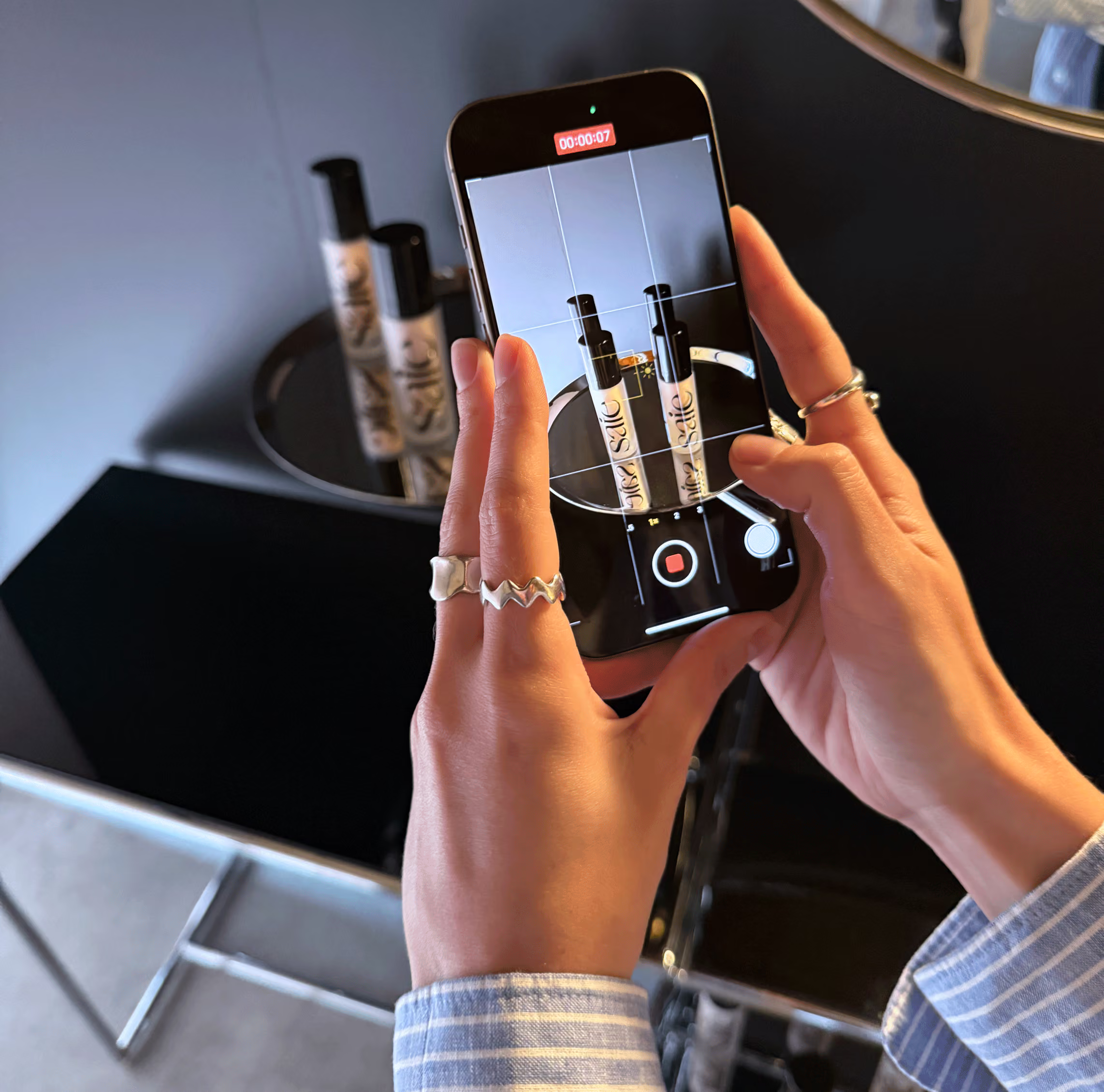
Dream Aspect's service pages price by the shoot, the video, the second or the licensed ad, with no startup package or raw-footage term; its pricing calculator adds a monthly plan. If you want design, decks and video from one monthly budget, a subscription such as Superside's is built for that and Dream Aspect is not. Outside Los Angeles it is not flying crews at present and sends or sources a local crew, so ask who will be on set.
- Live action: $4,100 for a one-off shoot or $3,075 a month on a monthly plan for one three-hour social content shoot each month, base prices before add-ons (pricing calculator); the video marketing page says you "Book a half or full content day", and "Full content delivery typically takes 7-10 days after the content shoot day" (video marketing), the first delivery, with variants, paid cut-downs and your approval round after. That page does not say how many videos a shoot yields.
- UGC: "pricing starts at $350 per video" and "our minimum order is 5 videos per batch", so the smallest order is $1,750 (UGC).
- CGI: about $70 a second for simple 2D and $300 to $1,000+ for complex 3D (CGI), made remotely, so it works the same for a startup in San Francisco or New York.
- Paid ads: "Test First. Pay Only If You Scale": testing is license-free and Dream Aspect is paid per licensed ad (ads).
Weighing one project against a monthly plan? See what it costs before you call anyone
Dream Aspect is a Los Angeles content production agency that makes live-action social content, UGC batches, CGI product videos and test-first ad creative. The Dream Aspect pricing calculator lets you choose a one-off shoot or a monthly plan, add or remove deliverables and see the price on the page, and if what you need is better bought elsewhere, including a subscription from someone else, tell us what you need to ship and by when and we will say so.
Build your quote on the pricing page →
Prefer to talk it through? The same page lets you book a 15-minute call to go over your quote and your dates. Talk to us →
Key takeaways
- As of 6 October 2026, published video subscriptions start at $1,195 a month with a three-month minimum (LimeLite Starter) and reach entry floors of $15,000 a month on an annual term (Superside).
- Superside also charges a $1,000 monthly software fee, so its first year costs $180,000 or $192,000, depending on whether the fee sits inside the $15,000 minimum.
- Break-even is the monthly fee divided by the project price: Superside's floor equals about three $5,000 explainers a month, every month for 12 months.
- None of the five subscription and retainer sellers we read printed a notice period, though all but Vidico and AD.JUST printed a minimum term.
- LimeLite charges $245 to $495 to deliver raw footage, and under the Copyright Act a transfer of copyright needs a signed writing.
Frequently asked questions
How much does a video production subscription cost per month in 2026?
From $1,195 a month (LimeLite Starter Monthly, three-month minimum) to entry floors of $15,000 a month on an annual term (Superside, plus a $1,000 software fee), on prices published as of 6 October 2026. Vidico starts at $5,000 a month, KPI Creatives charges $3,000 to $10,000 with a 6-month minimum, and AD.JUST's typical range is $1,500 to $3,500 for 4–8 edited videos. Dream Aspect's pricing calculator lists $3,075 a month for one three-hour social content shoot each month, a base price before add-ons, as of 5 October 2026.
Is a video subscription worth it for a Series A startup?
Only if you need steady volume for the whole minimum term. Superside's $15,000 floor equals three explainers a month at Vidico's $5,000 floor, every month for 12 months. If your video needs come in bursts around a launch, a funding announcement or a conference, Dream Aspect's view is that one-off projects are the better buy, because a subscription bills the quiet months too.
How many videos a month do you need before a subscription is cheaper?
It depends on the seller and the billing form. On published 2026 prices, Superside's floor needs about $15,000 of project work a month and Vidico's $5,000 floor equals one simple explainer a month. LimeLite's monthly-billed plans forfeit unused months, apart from a once-a-year carry-over, so one video a quarter on Starter Monthly costs $3,585 each.
How long does a video subscription take to deliver the first video?
Sellers publish different clocks. Superside promises a "first project landing within the first few weeks"; KPI Creatives says "The first shoot day is typically scheduled 2 to 3 weeks after contract signature"; LimeLite says "the turnaround time for most new video requests is just a week or two". For Dream Aspect live action, full content delivery typically takes 7–10 days after the shoot day.
Can you cancel a video production subscription at any time?
Mostly not in the first months. Superside runs on an annual commitment and KPI Creatives on a 6-month minimum. LimeLite sets a three-month minimum with a 30-day you-don't-pay promise and lets you cancel any time after 90 days. Vidico and AD.JUST publish no term. Video-editing and design subscriptions differ: Kimp says "You can cancel at any point in time" and Visugu says "Cancel Anytime".
Do you own the raw footage from a video subscription or agency?
Not automatically. Under 17 U.S.C. §204(a), a transfer of copyright needs a signed writing, and who keeps the files is a separate question. LimeLite charges $245 to $495 to deliver raw footage. Vidico's terms, under the law of Victoria, Australia, deem the finished work a work for hire for the client and assign ownership on full payment, without naming raw footage.
Can a San Francisco startup hire a Los Angeles agency for a single project?
Yes, if the delivery model is stated. Dream Aspect, in Los Angeles, makes CGI remotely at a published per-second price, so location does not change an animation project. For live action outside Los Angeles it is not flying crews at present and sends or sources a local crew instead. Ask any agency who will be on set before you sign.
Sources
Adjust Production
copyright.gov
KPI Creatives
LimeLite
LimeLite catalogue
LimeLite — Limelitestarter
LimeLite — Limelitestarter Annual
LimeLite — Limelitestarter Month To Month
LimeLite — Rawfiles
Limeliteplus
Limelitepro
Superside
Superside terms
The Sparkhouse
trial
trust center
Vidico
Dream Aspect