

How do you prepare for a social content shoot?
To prepare for a short social content shoot, work back from the shoot day, as of 26 October 2026. A week out, lock the shot list, hook variants, permit, releases and music. Two days out, frame for 9:16 inside TikTok's and Meta's safe zones (Meta suggests keeping roughly 14% of the top and 35% of the bottom clear) and prepare the product. On the day, confirm the call sheet, then back up every card and caption every cut.

At a glance:
- A week out: shot list, alternative hooks, a FilmLA permit for a City of Los Angeles location (at least three full business days ahead), releases and licensed music.
- Two days out: 9:16 at 540×960 or larger for TikTok, Meta's 14% top, 35% bottom and 6% side margins, and spare product.
- Morning of: call sheet confirmed, permit on hand, releases signed before anyone is on set.
- On set: hooks first, planned B-roll, backup audio and one person copying cards.
- After: two drive copies plus the card, captions on every cut; Dream Aspect typically delivers live action 7–10 days after the shoot day.
What is a pre-production checklist for a social video shoot?
A pre-production checklist for a social shoot is a dated list that ties each decision, form and file to the day it must be finished, so that nothing on it stops the camera. StudioBinder, which sells production-planning software, splits pre-production into four major steps: script development, budgeting and scheduling, logistics and hiring, and pre-visualization. It also suggests an alternate schedule in case Plan A falls through.
Vimeo's guide to making a shot list treats the list as a checklist of every shot, with shot types, camera movements, lighting and props, ordered by location and equipment to cut down on changes. Dream Aspect's checklist adds the failure each item prevents, because a short shoot has no spare hour. For volume, see how many videos per month a DTC brand needs.
What should you prepare a week before a social shoot?
A week before a social content shoot, start the slow items: the ones that wait on a permit office, a property owner, the talent or a music library. Put the shot list first, since the rest depend on where, who and what you film. TikTok's creative best practices for performance ads say to bring the hook forward within the first six seconds and to state your offer within the first three, and TikTok's guides recommend testing several hooks.

- Shot list: every shot with its type, movement, props and location, grouped by setup. Prevents: the shot nobody remembered until the edit.
- Hook variants: two or three alternative opening lines for each script. Prevents: one untested opening carrying the whole ad.
- Permit: a FilmLA application at least three full business days before a location shoot in the City of Los Angeles. Prevents: a shoot stopped on the day.
- Releases: a talent release for every identifiable person and a location release from whoever controls the property. Prevents: footage you cannot run as an ad.
- Music: tracks from a commercial library, chosen before the shoot. Prevents: muted audio or a rejected ad.
Do you need a FilmLA permit for a social shoot in Los Angeles?
FilmLA, which processes film permits for the City of Los Angeles, says the city's Administrative Code (Section 22.350) requires a permit for on-location commercial filming on both public and private property. Its guidance on whether you need a FilmLA permit puts the test plainly: "If you have the intent or potential to make money from your film footage or original photography, it is commercial activity by definition and legally requires a film permit." Dream Aspect's reading: brand content for Reels, TikTok or Shorts has that intent. Rules can differ in the other jurisdictions FilmLA serves.
FilmLA's City of Los Angeles area requirements say applications generally need at least three full business days before the first activity date, more for stunts and other high-impact work, and insurance on file with the City and FilmLA, as of 26 October 2026. Filming entirely on a Certified Studio property needs no permit. From April 27, 2026, FilmLA's Low Impact Permit Pilot Program offered a reduced-price permit for City-only shoots of three or fewer locations, over three consecutive filming days, with no more than 30 cast and crew; the pilot was funded through October 2026, so check FilmLA for an extension before you plan around it. For the trade-offs, see Dream Aspect's guide to a studio vs on-location shoot in Los Angeles.
Which releases and music licenses does a brand social shoot need?
Release-form guides from LegalZoom, Motion Array and Sprintlaw describe two documents. A talent release is a written agreement in which a person consents to be filmed and grants the right to use their image, voice and performance in specified ways; a parent or guardian signs for a minor. A location release, signed by the owner or a legal representative, grants the right to enter, film and use the footage, and does not replace talent consent. The guides are general, not legal advice.
- Talent release: legal name and contacts, the project, dates and locations, content types (video, stills, audio, behind-the-scenes), and where, in which territory and for how long the footage can run.
- Location release: the address and the areas you may use, dates and restrictions, an extension if bad weather delays you, and a clean-up clause.
Music for a brand video is cleared inside each app. TikTok's business blog post Explore royalty-free music in our Commercial Music Library says the general library is not pre-cleared for content a brand posts, and adds: "If you do not see the in-app Commercial Music Library, please ensure that you are using a Business Account." Meta says its Sound Collection, over 14,000 songs and sounds, can be used for commercial purposes like ads; Music Business Worldwide reported its arrival in Reels ads in 2022. Dream Aspect's reading: neither clearance is described as covering other platforms, so license cross-posted tracks separately.
What should you check two days before the shoot?
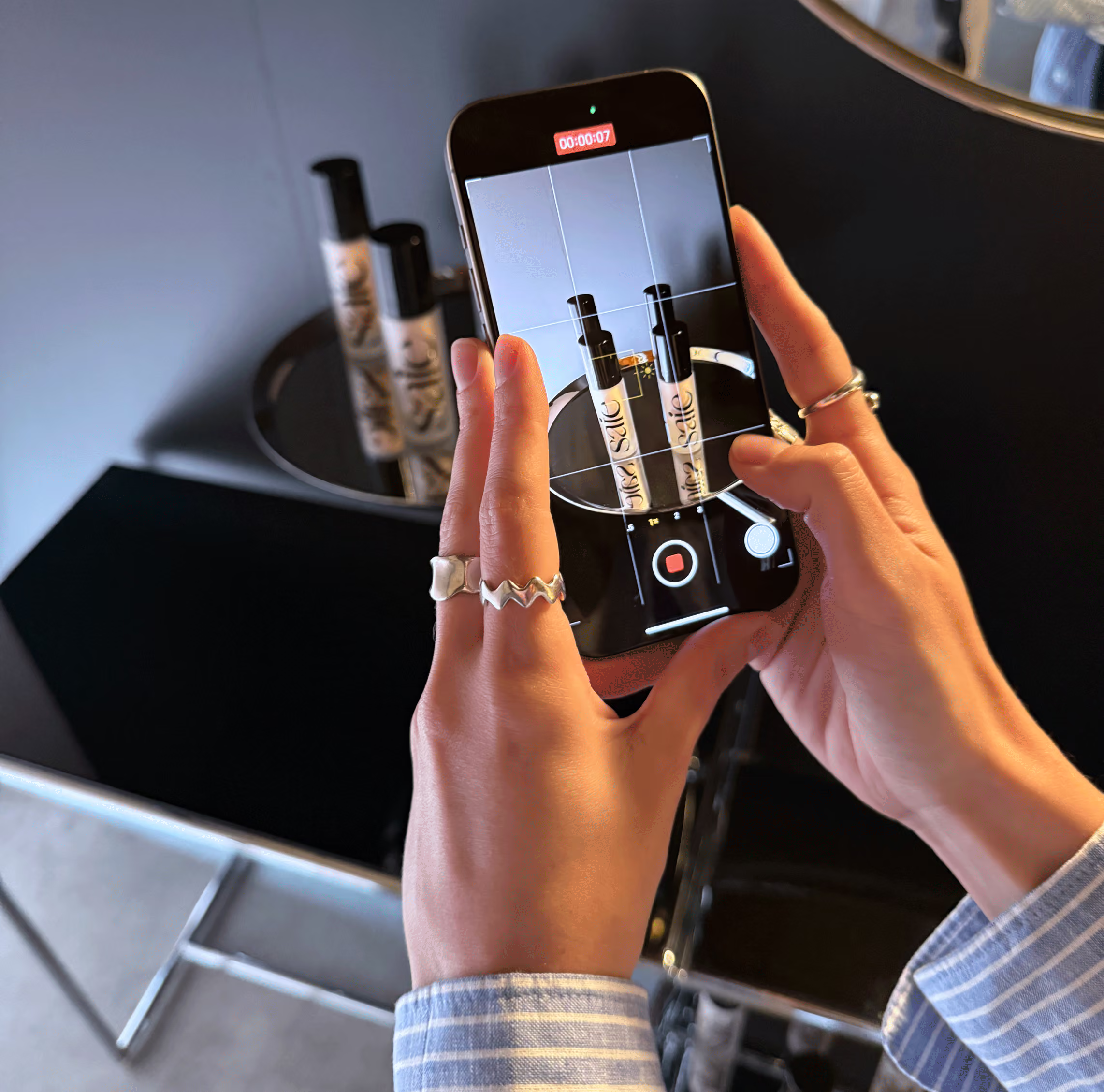
Two days before a social content shoot, check what decides whether a take survives the edit: frame, product, wardrobe and call sheet. TikTok's In-Feed ad specifications recommend vertical 9:16 at 540×960 px or larger, and say the safe zone depends on orientation, caption length and extra formats, with downloadable safe-zone files, as of 26 October 2026. Meta's Instagram Reels ad specs recommend a 9:16 asset at 1440 x 2560 pixels.

Meta's Reels ad specs page also says: "Consider leaving roughly 14% of the top, 35% of the bottom, and 6% on each side of your asset free from text, logos, or other key creative elements". Those margins sit on the Reels image-ad page, so check Meta's Reels safe zone checker before relying on them for video. Meta also reports, from its own split tests, 34.5% lower cost per result for 9:16 video with audio and key messages in the safe zone than for image ads on Reels.
- Frame: the product and any text inside both platforms' safe zones. Prevents: a logo or claim hidden under the caption or button.
- Product: a beauty photographer's guide to preparing skincare products for a photoshoot suggests 3–6 units of each product, straight labels, aligned caps and lint-free cloths. Prevents: a smudged hero unit with no spare.
- Other brands' logos: Adobe's pre-production tips for smooth video shoots suggest masking logos or trademarks with stickers or covers. Prevents: a third-party mark in your ad.
- Wardrobe: Cerious's corporate video production checklist advises avoiding busy patterns, bright whites and visible logos. Prevents: clothing that fights the product.
- Call sheet: call times, address, parking, weather and nearest hospital, the details StudioBinder's call sheets carry. Prevents: late talent at the wrong entrance.
What should happen on the morning of the shoot and on set?
On the morning of a social content shoot, confirm rather than plan. Check that everyone has the call sheet, that the permit and proof of insurance are on hand for a location shoot, and that every release is signed before the person or property is on camera; the release guides advise collecting signatures before talent goes on set. Then charge batteries, clear the cards and load both safe-zone overlays onto the monitor.
- Hooks first: the alternative openings, filmed while talent and light are fresh. Prevents: rushing the seconds TikTok says to bring forward.
- Ticked shot list: each shot checked off when done. Prevents: a gap found after the set is struck.
- B-roll: Wistia's Shooting for the Edit describes B-roll as supplementary footage that drives the visual story, planned in the script. Prevents: cuts with nothing to cut to.
- Backup audio: a Baruch College guide to video shooting recommends a backup recorder just out of frame. Prevents: a good take with unusable sound.
- Card copies: Larry Jordan's 3-2-1 backup strategy has one dedicated person copy each card's full contents into its own folder on two separate storage systems, then verify them. Prevents: a lost card.
What should happen after a social content shoot?
After a social content shoot, secure the footage before anyone edits it. A LinkedIn Learning course on video data management on set and in the field suggests leaving location with three copies: two on hard drives and one still on the card. Mediagear's pro workflow guide to backing up video footage recommends offload software with checksums, because a standard file copy can report success despite dropped frames. Dream Aspect's suggestion for file names: date, location, shot-list number and take, in that order.
Meta's help page on how to add captions to your video ad on Facebook and Instagram says captions help people watch with the sound off; advertisers can upload an SRT file or use automated captions, available only in English for advertisers in the United States and Canada, as of 26 October 2026. An older Meta post, Capture Attention with Updated Features for Video Ads, reported that in one study 41% of Facebook video ads were basically meaningless without sound. Caption every cut.
Dream Aspect, a Los Angeles video production company, typically delivers live-action video 7–10 days after the shoot day, according to its video marketing page. If creator-filmed video suits the brief better, Dream Aspect's UGC starts from $350 per video with a 5-video minimum, so $1,750 for a first batch, as of 26 October 2026. For launches, see how much content a DTC product launch actually needs.
Want to price the shoot you just planned? The Dream Aspect pricing calculator shows the price on the page: choose a one-off shoot or a monthly plan, then add or remove deliverables such as a shoot brief, priority delivery, CGI or UGC.
Build your quote on the pricing page →
Prefer to talk it through? Talk to us → or book a 15-minute call from the pricing page.
Key takeaways
- Work back from the shoot day: a week out for the shot list, hook variants, permit, releases and music; two days out for framing, product, wardrobe and the call sheet.
- FilmLA says commercial filming in the City of Los Angeles needs a permit on public and private property; applications generally need at least three full business days, as of 26 October 2026.
- Frame 9:16 inside both platforms' safe zones: Meta suggests keeping roughly 14% of the top, 35% of the bottom and 6% of each side clear, and TikTok publishes downloadable safe-zone files.
- Get talent and location releases signed before anyone is on set, and take music from TikTok's Commercial Music Library or Meta's Sound Collection, licensing cross-posted tracks separately.
- Leave set with three copies of the footage, two drives and the card, then caption every cut; Dream Aspect typically delivers live action 7–10 days after the shoot day.
Frequently asked questions
How far ahead should you prepare for a social content shoot?
Start about a week out for a shoot of a few hours. That week covers the slow items that depend on other people: the shot list and hook variants, a FilmLA permit if you film on location in the City of Los Angeles (applications generally need at least three full business days), talent and location releases, and licensed music. Framing, product and wardrobe checks follow two days before the shoot.
Do you need a permit to film brand content in Los Angeles?
Usually yes, on location. FilmLA says the Los Angeles Administrative Code requires a permit for commercial filming on public and private property in the city, and that the intent or potential to make money from footage makes filming commercial. Filming entirely on a Certified Studio property is exempt. Applications generally need at least three full business days, and insurance must be on file, as of 26 October 2026.
What are the safe zones for Instagram Reels and TikTok?
Roughly 14% of the top, 35% of the bottom and 6% of each side of a 9:16 Reels asset should stay free of text, logos and key elements, Meta suggests on its Reels image-ad page. TikTok publishes no single pixel map: its In-Feed specifications say the safe zone depends on orientation, caption length and extra formats, and offer downloadable safe-zone files, as of 26 October 2026.
What should a talent release include?
A talent release should include the person's full legal name and contact details, the project, shoot dates and locations, the content types covered, and where the footage can run, in which territory and for how long, according to release-form guides from LegalZoom, Motion Array and Sprintlaw. A parent or guardian signs for a minor. A location release from the property owner does not replace it.
Can a brand use any music in a TikTok or Reels video?
No. TikTok says its general library is not pre-cleared for content a brand posts, and business accounts use its Commercial Music Library instead. Meta says its Sound Collection, over 14,000 songs and sounds, can be used for commercial purposes like ads, while its licensed music library is for personal use. Neither clearance is described as covering other platforms, so license a cross-posted track separately.
How should you back up footage from a social shoot?
Back up on set, before anyone edits. Larry Jordan's 3-2-1 backup strategy has one dedicated person copy each card's full contents into its own folder on two separate storage systems, then verify the copies. A LinkedIn Learning course suggests leaving the location with three copies, two on hard drives and one still on the card, and Mediagear recommends offload software with checksums.
How soon after a shoot do you get the finished videos?
Dream Aspect typically delivers live-action video 7–10 days after the shoot day, according to its video marketing page, as of 26 October 2026. Other producers set their own turnaround, so ask before you book. Plan captions, approvals and any cross-platform music licensing inside that window, so the finished cuts can go live on TikTok, Reels and Shorts as soon as they arrive.
Sources
Adobe
- Pre-production tips for smooth video shoots — mask logos or trademarks with stickers or covers (guidance for stock contributors)
Baruch College
- Fundamentals of Video Shooting — a backup audio recorder placed just out of frame
Cerious
- Corporate video production checklist pre production delivery — share the script with talent in advance; avoid busy patterns, bright whites and visible logos
Courtney Dailey
- How to Prepare Skincare Products for a Photoshoot — 3–6 units of each product; straight labels, aligned caps and droppers; microfiber or lint-free cloths
FilmLA
- Do I Need a FilmLA Permit? Some Guidance from FilmLA — intent or potential to make money from footage makes filming commercial and requires a permit
- Area Requirements: City of Los Angeles - FilmLA — permit for commercial filming on public and private property (Section 22.350); at least three full business days; insurance on file; Certified Studio exemption
- City of Los Angeles Low Impact Permit Pilot Program - FilmLA — from April 27, 2026: three or fewer locations, three consecutive filming days, no more than 30 cast and crew; a pilot with a sunset date
Larry Jordan
- 3 – 2 – 1 Backup Strategy — backups start on set; one dedicated person; copy each card to two separate storage systems and verify
LegalZoom
- Secure Your Production with a Location Release Form — what a location release covers: address, areas, dates, restrictions, extension, clean-up, signer's authority
LinkedIn Learning
- From the course: Video Data Management on Set and in the Field — three copies before leaving location: two on hard drives, one on the card
Mediagear
- How to Back Up Video Footage: A Pro Workflow Guide — offload software with checksums; a plain file copy can report success despite dropped frames
Meta
- Awareness Image Ad Specs on Instagram Reels — 9:16 at 1440 x 2560 pixels; leave roughly 14% top, 35% bottom and 6% each side clear; 34.5% lower cost per result (Meta's own analysis)
- Add Captions to Your Video Ad on Facebook and Instagram — captions for sound-off viewing; SRT upload or automated captions (English only, United States and Canada)
- Capture Attention with Updated Features for Video Ads — 41% of Facebook video ads in one study basically meaningless without sound (older post)
Motion Array
- Talent location releases when what do you need — when talent and location releases are needed and what they cover
Music Business Worldwide
- Meta offers royalty free music library to Instagram Reels advertisers — Meta Sound Collection music in Reels ads (2022)
Sprintlaw
- What Is A Talent Release Form? — consent to be filmed and use of image, voice and performance; a parent or guardian signs for a minor (Australian guide)
StudioBinder
- Pre production — four major pre-production steps; alternate schedules prepared in advance (vendor guidance)
- Pre production software — call sheets with weather, location, cast and nearest hospital (vendor-stated)
TikTok
- Creative best practices for performance ads — hook within the first six seconds; offer within the first three; test several hooks
- TikTok Auction In-Feed Ads — vertical 9:16 at 540×960 px or larger; safe zone depends on orientation, caption length and extra formats; downloadable safe-zone files
- Explore royalty-free music in our Commercial Music Library — commercial usage rights; Business Account needed; general library not pre-cleared for brand content
Vimeo
- How to make a shot list to simplify the video production process — shot types, movements, lighting and props; order shots by location and equipment
Wistia
- Shooting for the Edit — B-roll as supplementary footage that drives the visual story; plan it in the script
Dream Aspect
- Dream Aspect video marketing — live action typically delivered 7–10 days after the shoot day
- Dream Aspect UGC — from $350 per video with a 5-video minimum ($1,750)