

How much does a FOOH CGI ad cost in 2026?
As of 26 October 2026, a single-scene FOOH ad costs about $2,000–$8,000 on the one studio estimate we found, from Maverick Frame's FOOH guide, a studio that sells FOOH production. Its priced brief puts a one-location, eight-second spot at $7,000 and a three-idea, 30-second version at $23,100. The only FOOH-specific timeline we found is 2–3 weeks, and Dream Aspect's window for complex 3D is 2 weeks to a month.
At a glance:
- Single-scene FOOH clip: about $2,000–$8,000, by Maverick Frame's estimate; a fully branded, multi-shot campaign: about $10,000–$40,000 or more.
- One plate, one idea, eight seconds: $7,000 in Maverick Frame's priced brief. Three ideas over 30 seconds: $23,100.
- The extremes: roughly $500 for a simple, AI-built clip, and up to tens of thousands for a live-action plate with heavy CGI.
- Time: 2–3 weeks depending on scale, per the creative agency Yellow on FOOH.com; Dream Aspect's complex-3D window is 2 weeks to a month.
- Dream Aspect publishes no FOOH price. At its complex-3D rate of about $300–1,000+ per second, an eight-second clip comes to about $2,400–$8,000+ by our arithmetic, which is not a quote.
What is a FOOH ad?
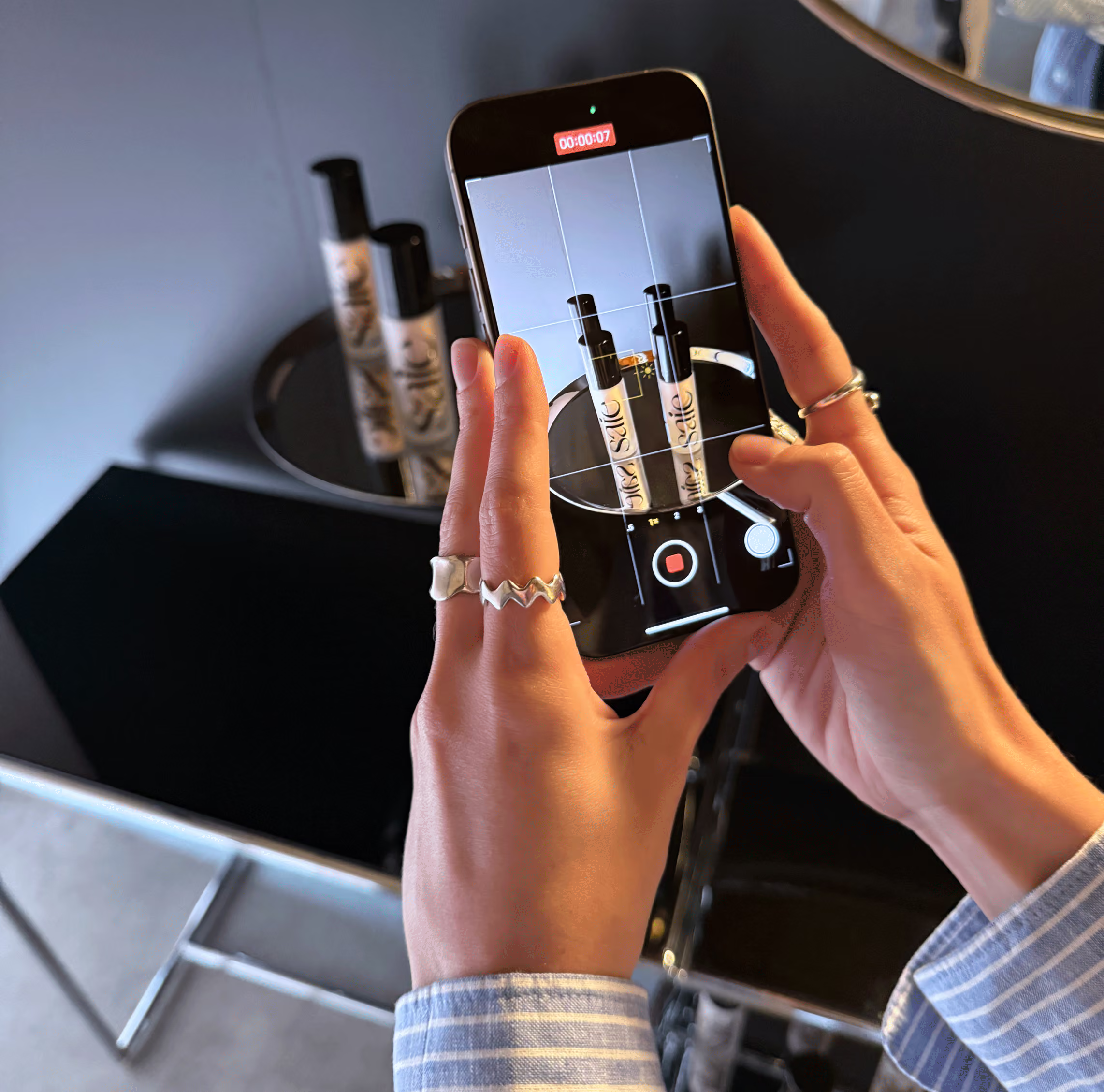
A FOOH ad is a short social video that places a CGI object or a fake billboard into real footage of a real place, so that something impossible appears to be there. Groove Jones, a Dallas studio that makes them, describes FOOH in its article on faux OOH advertising as digitally created displays that mimic real installations such as billboards, building wraps or public projections. The Ophir Studio FOOH guide adds that the real footage can even be shot on a smartphone. For when to skip real footage entirely, see when to use CGI instead of live action.

FOOH ads are short. FOOH.com's beginner's guide for agencies describes them as 10 to 15 second videos, and Maverick Frame's priced brief is built around a single eight-second spot. OneDay's blog post CGI Marketing Campaigns: Are they here to stay? cites Maybelline's mascara-wand buses, Nike's oversized trainers and Lacoste's crocodiles on buildings as examples. Groove Jones's DICK'S Sporting Goods FOOH case study describes a series in which giant NFL-licensed Crocs appear to be delivered onto store parking lots, made with generative AI tools alongside traditional VFX.
What does a FOOH quote pay for, line by line?
Maverick Frame's 2026 field guide, "One Plate, 8 Seconds", is the only line-item FOOH price we found published. The English edition of the one-plate brief prices the three-idea version at $23,100. A plate is the real-world footage that the CGI object is composited into. The German edition of the brief lists a six-line base quote for the three-idea version:
- three licensed stock plates at $900 each: $2,700
- three hero objects at $1,200 each: $3,600
- one simulation per idea at $1,500 each: $4,500
- 30 seconds of lighting and rendering at $200 per second: $6,000
- compositing: $3,400
- five platform cuts at $300 each: $1,500
Those six Maverick Frame lines add up to $21,700. Two further items in the quote were not visible in the copy we read, so we cannot show how the total reaches $23,100. Maverick Frame's itemised breakdown attributes most of the cost to object modeling, simulation and compositing rather than runtime. Lighting and rendering is the only line priced per second, and by our arithmetic it is under a third of the six visible lines. The five platform cuts, at $300 each, are the cheapest of the six visible lines.
Why can one FOOH ad cost several times another?
Maverick Frame's What is FOOH explainer puts a FOOH clip at roughly $500 for a simple, AI-built piece, and up to tens of thousands for a full live-action plate with heavy CGI. The explainer says: "There is no flat rate — the price tracks the complexity of the build, the realism required, and how many revision rounds the client needs." Its priced brief shows how fast ideas multiply the bill: $23,100 for three ideas is about 3.3 times the $7,000 one-idea spot, by our arithmetic. Across the Maverick Frame material we read, these five things move a FOOH quote:
- the number of ideas, since each needs its own plate, hero object and simulation
- realism, from an AI-built clip near $500 to a live-action plate with heavy CGI
- seconds rendered, because lighting and rendering is priced per second
- revision rounds, which the studio's rate table leaves out
- whether the CGI object is built once and reused, or rebuilt for each stage
Maverick Frame's FOOH CGI advertising roadmap says the expensive thing is the CGI object, not the video. In its sample breakdown the CGI product asset is built once, at approval, for about $3,700. The Spanish edition of the roadmap prices a single-location campaign with a two-city follow-up at $25,000 when planned as one roadmap, and at $32,400 when bought stage by stage from scratch, mainly because the CGI product asset gets rebuilt. In our reading, the cheapest second FOOH ad is one that reuses the first ad's object.
What would a FOOH clip cost at Dream Aspect's CGI rates?
Dream Aspect does not publish a FOOH price: its CGI page prices animation per second and, as of 26 October 2026, does not mention FOOH. The nearest published figure is the complex-3D rate. As of 5 October 2026, Dream Aspect's CGI production page prices complex 3D at about $300–1,000+ per second, depending on the number of scenes and objects, animation detail and dynamics, and visual effects, lighting and rendering time. The page says "A complex 3D animation may require 6–10+ hours per second", which is why the rate is quoted per second.
By our arithmetic, and not as a quote, an eight-second FOOH clip at Dream Aspect's complex-3D rate comes to about $2,400–$8,000+. That is a sizing figure: the rate was published for CGI product animation, and a FOOH ad also needs real footage to composite into. Run the division the other way and Maverick Frame's published prices land inside Dream Aspect's band: its $7,000 one-plate spot works out at about $875 per finished second, and its $23,100 three-idea version at about $770. Dream Aspect's full rates by tier are in how much CGI product animation costs.
How long does a FOOH ad take to make?
Yellow, a creative agency profiled in FOOH.com's creator spotlight, says FOOH timelines can range from 2–3 weeks depending on scale, the only FOOH-specific timeline we found. Dream Aspect's CGI page gives 2 weeks to a month for complex 3D or animated VFX, which is the tier a photoreal FOOH object falls in, by our reading. Maverick Frame's rate table leaves out turnaround and revision rounds, and Ophir Studio's guide names budget and timeline as factors without giving numbers. Yellow lists six stages:
- strategy
- concept development
- pre-visualization
- CGI production
- compositing
- sound design
Maverick Frame's Spanish edition of the one-plate brief adds two timing points: tracking and simulation need their days, and urgent work takes half the deadline for 40% more. A production window is not a delivery commitment. If a launch date is fixed, such as a Christmas CGI product video for 2026, get the date in writing from whichever studio you hire. The stages behind Dream Aspect's windows are set out in how a CGI product video is made.
Is a FOOH ad cheaper than a real billboard?
A FOOH ad skips the media buy and the physical installation, which is the case its users make for it. The Drum reported that Gymbox's marketing director called out-of-home a huge expense for smaller brands, and said digital executions can drive similar or more reach for a fraction of the price. Groove Jones says its FOOH campaigns often garner millions of online impressions without a real-world installation, and reports 751,000 Instagram views for its DICK'S Sporting Goods video, a figure it publishes itself and that we have not seen verified.

A FOOH ad's hidden cost is trust. OneDay's blog flags transparency and over-saturation as risks of the format, and The Drum's coverage of the trend notes that a viral FOOH campaign might temporarily boost a brand's visibility with a younger audience, though some would argue it could ultimately damage the brand's reputation. Marketing Brew reported in 2023 that Maybelline's VP of marketing said part of the goal was to get people debating whether the videos were real. In our reading, plan for viewers to know the ad is CGI, and check each platform's current disclosure rules before you post.
What should you ask before you approve a FOOH quote?
A FOOH quote from Dream Aspect or any other studio should let you check its price against its scope. Before you approve one, ask for these six things in writing, so that two quotes for the same idea can be compared line by line and the gap between them explained:
- the finished length in seconds, and how many platform cuts
- how many ideas, plates and hero objects, and whether each plate is stock or shot
- whether simulation is included, and for how many ideas
- how many revision rounds the price covers
- who owns the CGI object, and what reusing it in a follow-up costs
- the production window, and the price of a rush
Want to price your FOOH ad before you brief it? The Dream Aspect pricing calculator shows the price on the page: choose a one-off shoot or a monthly plan, then add or remove deliverables such as a shoot brief, priority delivery, CGI or UGC.
Build your quote on the pricing page →
Prefer to talk it through? Talk to us → or book a 15-minute call from the pricing page.
Key takeaways
- As of 26 October 2026, Maverick Frame, which sells FOOH production, estimates a single-scene FOOH clip at about $2,000–$8,000 and a multi-shot campaign at about $10,000–$40,000 or more. We found no independent price survey.
- Maverick Frame's priced brief puts one plate, one idea and eight seconds at $7,000, and three ideas over 30 seconds at $23,100.
- Most of a FOOH quote goes on the CGI object, simulation and compositing, not runtime. Planned as one roadmap with the object reused, Maverick Frame's campaign example costs $25,000 against $32,400 bought stage by stage.
- The only FOOH-specific timeline we found is 2–3 weeks; Dream Aspect's window for complex 3D is 2 weeks to a month, and rush work costs 40% more in Maverick Frame's brief.
- Dream Aspect publishes no FOOH price. Its complex-3D rate of about $300–1,000+ per second puts an eight-second clip at about $2,400–$8,000+, by our arithmetic, not a quote.
Frequently asked questions
How much does a FOOH ad cost?
About $2,000–$8,000 for a single-scene clip, on the one studio estimate we found, from Maverick Frame, which sells FOOH production, as of 26 October 2026. The same studio puts a fully branded, multi-shot campaign at about $10,000–$40,000 or more, and prices a one-location, eight-second spot at $7,000 in its published brief. We found no independent survey of FOOH prices.
How long does it take to make a FOOH ad?
About two to three weeks, according to Yellow, a creative agency profiled on FOOH.com, which says timelines can range from 2–3 weeks depending on scale. Dream Aspect's CGI page gives 2 weeks to a month for complex 3D or animated VFX. Maverick Frame's Spanish brief says urgent work takes half the deadline for 40% more.
Does Dream Aspect publish a FOOH price?
No. Dream Aspect's CGI page prices animation per second and does not mention FOOH. Its complex-3D rate, about $300–1,000+ per second as of 5 October 2026, would put an eight-second clip at about $2,400–$8,000+ by our arithmetic. That is a sizing figure built from a CGI product animation rate, not a FOOH quote.
Why does a three-idea FOOH ad cost so much more than one idea?
Because each idea needs its own plate, hero object and simulation. In Maverick Frame's priced brief, one idea in eight seconds costs $7,000 and three ideas in 30 seconds cost $23,100, about 3.3 times as much by our arithmetic. Its itemised quote puts most of the money into objects, simulation and compositing rather than runtime.
How long is a typical FOOH ad?
About 8 to 15 seconds in the sources we found. FOOH.com's beginner's guide for agencies describes FOOH ads as 10 to 15 second videos, and Maverick Frame's priced brief is built around one eight-second spot. Length matters for price because lighting and rendering is priced per second, at $200 a second in Maverick Frame's itemised quote.
Is a FOOH ad cheaper than a real billboard?
It can be, because a FOOH ad needs no media buy and no physical installation. The Drum reported Gymbox's marketing director saying out-of-home is a huge expense for smaller brands, and that digital executions can drive similar or more reach for a fraction of the price. The trade-off is trust: OneDay's blog flags transparency and over-saturation as risks.
Sources
FOOH.com
- FOOH Creator Spotlight: Meet Global Creative Agency Yellow — FOOH timelines of 2–3 weeks depending on scale, and six production stages
- FOOH: The Beginner’s Guide for Agencies — FOOH ads described as 10 to 15 second videos
Groove Jones
- Faux OOH advertising: how CGI videos on social are redefining OOH — what FOOH is; millions of online impressions without a real-world installation
- DICK'S Sporting Goods FOOH holiday campaign: Crocs NFL collection — giant NFL-licensed Crocs series; 751,000 Instagram views, self-reported
Marketing Brew
- Why some brands are embracing ‘fake out-of-home’ — Maybelline's VP of marketing on getting people to debate whether the videos were real (2023)
Maverick Frame
- Best FOOH agencies — single-scene FOOH clip about $2,000–$8,000; multi-shot campaign about $10,000–$40,000 or more (an estimate)
- What is FOOH — roughly $500 for a simple AI-built clip, up to tens of thousands; no flat rate
- fooh brief one plate (English PDF) — one plate, one idea, eight seconds at $7,000; three-idea, 30-second version at $23,100
- fooh brief one plate (German PDF) — six-line base quote totalling $21,700
- fooh brief one plate (Spanish PDF) — urgent work at half the deadline for 40% more
- fooh cgi advertising (English PDF) — the CGI object as the expensive part; CGI product asset about $3,700
- fooh cgi advertising (Spanish PDF) — $25,000 planned as one roadmap against $32,400 bought stage by stage
OneDay
- CGI Marketing Campaigns: Are they here to stay? — FOOH examples; transparency and over-saturation as risks
Ophir Studio
- fooh complete guide to fake out of home advertising — real footage, even from a smartphone; budget and timeline named as factors, no figures
The Drum
- how the outdoor advertising industry responding faux out home — Gymbox's marketing director on out-of-home as a huge expense for smaller brands; a viral FOOH campaign might temporarily boost visibility with a younger audience, though some would argue it could damage the brand's reputation
Dream Aspect
- How Much Does CGI Product Animation Cost? Our Rates and Production Windows by Complexity Tier — complex 3D about $300–1,000+ per second; 2 weeks to a month (rates as of 5 October 2026)
- CGI Production — Dream Aspect's CGI service page; no FOOH price published